













Software and digital applications - Territory management solution - Natural resources and territories

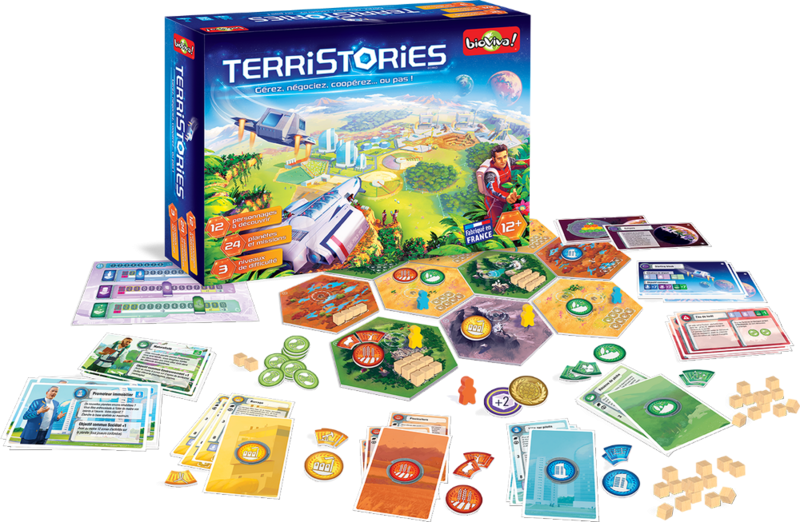
TerriStories: a board game based on CIRAD research © Bioviva
During the game, environmental, economic and social uncertainties are introduced. Participants are thus encouraged to react and to co-design operational management rules that take into account both their individual needs and those of the collective.
Beyond the development of short-term, context-specific collaborative tools, TerriStories® aims to foster endogenous and lasting change, from local to global scales.
An adapted version is now also available for the general public, as a board game published by Bioviva, a company that develops eco-designed games manufactured in France. It helps raise awareness about the conditions and usefulness of stakeholder dialogues for sustainable development challenges.

Method design and validation
Projects involving diverse stakeholders with potentially conflicting interests are numerous. The TerriStories® game is therefore highly adaptable and :
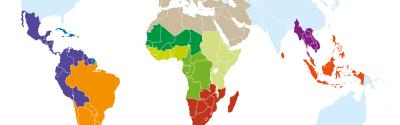
TerriStories® has been implemented in various regions of the world and across diverse cultural contexts, for both development and research purposes. It is particularly relevant for local authorities, NGOs, professional organisations and stakeholders involved in major infrastructure projects, and is well suited to addressing issues such as :
Interested in discovering real-life case studies and understanding how the game works? Watch the videos.
Would you like to use TerriStories® in a field-based project in the Global South? CIRAD can support you. To implement the game operationally, our researchers work with you through :
If you wish to implement TerriStories® in a field project, Insuco BF, a CIRAD partner consultancy, offers the method and the TerriStories® platform to its clients, with CIRAD’s scientific support.
The company BIOVIVA (Montpellier) markets the game for the general public and can offer adapted versions for conflict resolution in corporate or local authority contexts.
TerriStories® is a trademark registered by CIRAD. The game rules and graphic elements (game sets, boards, cards, etc.) are protected by design rights. An accredited network and licensing system have been established to ensure the quality of implementation of both the game and the methodology.
D’Aquino P., Ba A., Bourgoin J., Cefai D., Richebourg C., Hopsort S., Pascutto T., 2017. Du savoir local au pouvoir central : un processus participatif sur la réforme foncière au Sénégal. Natures, Sciences, Sociétés, 25, 4, . https://doi.org/10.1051/nss/2018001
D’Aquino P., 2016. TerriStories®, un jeu au service de l’invention collective dans les politiques publiques. Journal of Sociocultural community development and practices. 10, 71-80. http://www.atps.uqam.ca/numero/n10/pdf/ATPS_d%E2%80%99Aquino_2016.pdf
Software and digital applications - Territory management solution - Natural resources and territories

Planting material and propagation - Sustainable agriculture - Natural resources and territories
Territory management solution - Sustainable agriculture - Natural resources and territories