


















Analysis-diagnosis service - Sustainable agriculture - Food and agrifood technology - Natural resources and territories - Animal production and health

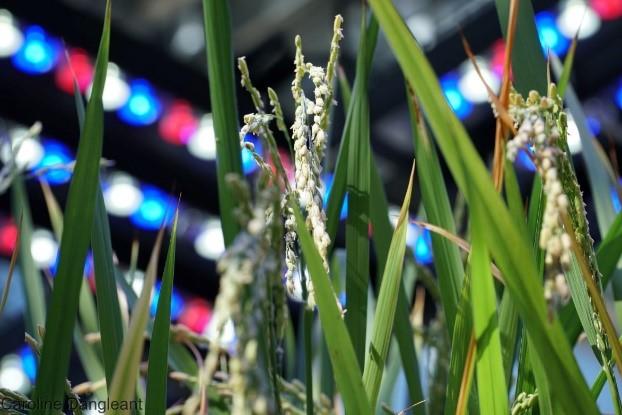
Variety selection © Caroline Dangléant
The plant ecophysiology team will help you better understand and analyze the physiological traits of a plant. More specifically, it studies the interaction with its environment, particularly with a view to predicting its ability to cope with abiotic stress.
You will learn about plant growth dynamics, a key concept for understanding how plant populations function and improving their production.
Climate change could be a factor in the extinction of certain varieties that lack the necessary capacity to adapt. Plant breeders must therefore anticipate these changes. However, many of them, particularly in the private sector, neglect this step and proceed by trial and error, with results that are sometimes slow or uncertain.
Our advice to experts, backed by our analyses and methods, provide tangible, actionable insights to enhance efficiency.. Specializing in the knowledge and analysis of the fine physiological traits of plants, the researchers at the ecophysiology platform support you in advancing your research and selecting seeds of interest :

Method design and validation
The ecophysiology platform offers its expertise, particularly on plants grown in Mediterranean and tropical areas :
What will consumers be eating in the coming years? What products will be available on store shelves? Variety selection faces challenges that affect not only the seed sector, but also every link in the value chain.
What are the interesting traits of the best-performing varieties?
Seed producers and agricultural advisors are the primary guarantors of seed quality. We work with them to analyze the processes (in situ and in interaction with the environment) of the varieties and quantify their photosynthetic performance. This enables us to determine the ideal environments and conditions for the development of the crops studied and, in a second phase, to identify the genes that promote their performance.
Which varieties should be produced tomorrow?
Cropping systems are evolving and diversifying, particularly because certain species are adapting to the specific soil and climate conditions of each region. Conversely, with climate change, other species will disappear. Therefore, assessing the ability of certain crops to adapt or not to different environmental variables (light, CO₂, temperature, etc.) makes it possible to improve agricultural performance by identifying resilient crops.
How can we improve the specific characteristics of raw materials for processing?
The choice of raw materials plays a decisive role in the organoleptic quality of processed products. Characteristics such as water content, crush resistance, etc. are linked to the variety and place of cultivation. With cross-functional expertise among our teams in variety selection and agri-food processing, we regularly support projects involving processors based on predefined specifications. In collaboration with agronomists, we also define the most sustainable farming practices in conjunction with producers in tropical and Mediterranean regions.
Which fruits, vegetables, and legumes will be available and appealing to consumers in the coming years?
Although investment is still low, distributors are increasingly collaborating on scientific projects to identify products that have a positive environmental impact and meet specifications in terms of organoleptic quality. Rice, cocoa, bananas, and other products fall within this area of expertise. We are establishing multi-stakeholder relationships to ensure a sustainable and responsible supply chain aimed at reducing pesticides and selecting varieties of interest in response to consumer expectations and health regulations.
Three support packages tailored to your needs and strategy :
La plupart des travaux menés avec des parties prenantes de sociétés privées sont confidentiels.
Fabre D., Dingkuhn M. 2021. Why is rice Amax (at saturating CO2) more heritable than Asat (at ambient CO2)?. Plant Breeding.
https://doi.org/10.1111/pbr.1300
Dingkuhn M., Luquet D., Fabre D., Muller B., Yin X., Paul M.J. 2020. The case for improving crop carbon sink strength or plasticity for a CO2-rich future. Current Opinion in Plant Biology, 56 (n.spéc. Biotic interactions AGRI 2019) : p. 259-272.
https://doi.org/10.1016/j.pbi.2020.05.012
Fabre D. 2020. Effet des relations sources-puits en carbone sur le taux de photosynthèse chez le riz. Implications pour l'amélioration variétale dans un contexte de changement climatique. Montpellier : Montpellier SupAgro, 151 p. Thèse de doctorat -- Écophysiologie et adaptation des plantes.
Fabre D., Dingkuhn M., Yin X., Clément-Vidal A., Roques S., Soutiras A., Luquet D. 2020. Genotypic variation in source and sink traits affects the response of photosynthesis and growth to elevated atmospheric CO2. Plant, Cell and Environment, 43 (3) : p. 579-593. https://doi.org/10.1111/pce.13693
Luquet D., Larue F., Fabre D., Rebolledo Cid M.C., Clément-Vidal A., Rouan L., Beurier G., Dingkuhn M. 2020. Why and how crop models should account for C source-sink relationships better to address future agro-climatic challenges [S1-O.07]. In : Crop modelling for agriculture and food security under global change: Book of abstracts. Montpellier : CIRAD, p. 50-51. International Crop Modelling Symposium (iCROPM 2020), 2020-02-03/2020-02-05, Montpellier (France).
Fabre D., Yin X., Dingkuhn M., Clément-Vidal A., Roques S., Rouan L., Soutiras A., Luquet D. 2019. Is triose phosphate utilization involved in the feedback inhibition of photosynthesis in rice under conditions of sink limitation? Journal of Experimental Botany, 70 (20) : p. 5773-5785.
https://doi.org/10.1093/jxb/erz318
Luquet D., Perrier L., Clément-Vidal A., Jaffuel S., Verdeil J.L., Roques S., Soutiras A., Baptiste C., Fabre D., Bastianelli D., Bonnal L., Sartre P., Rouan L., Pot D. 2019. Genotypic covariations of traits underlying sorghum stem biomass production and quality and their regulations by water availability: Insight from studies at organ and tissue levels. Global Change Biology. Bioenergy, 11 (2) : p. 442-462.
https://doi.org/10.1111/gcbb.12571
Analysis-diagnosis service - Sustainable agriculture - Food and agrifood technology - Natural resources and territories - Animal production and health

Analysis-diagnosis service - Natural resources and territories
Analysis-diagnosis service - Natural resources and territories