










- Home
- Worldwide
- Our regional offices
- Southeast Asian Islands
- News : Southeast Asian Islands
- IndoKakao: strengthening post-harvest know-how for premium cocoa in Java
From fermentation to circular economy: IndoKakao technical training connects research, artisans and farmers to upgrade Indonesian cocoa quality
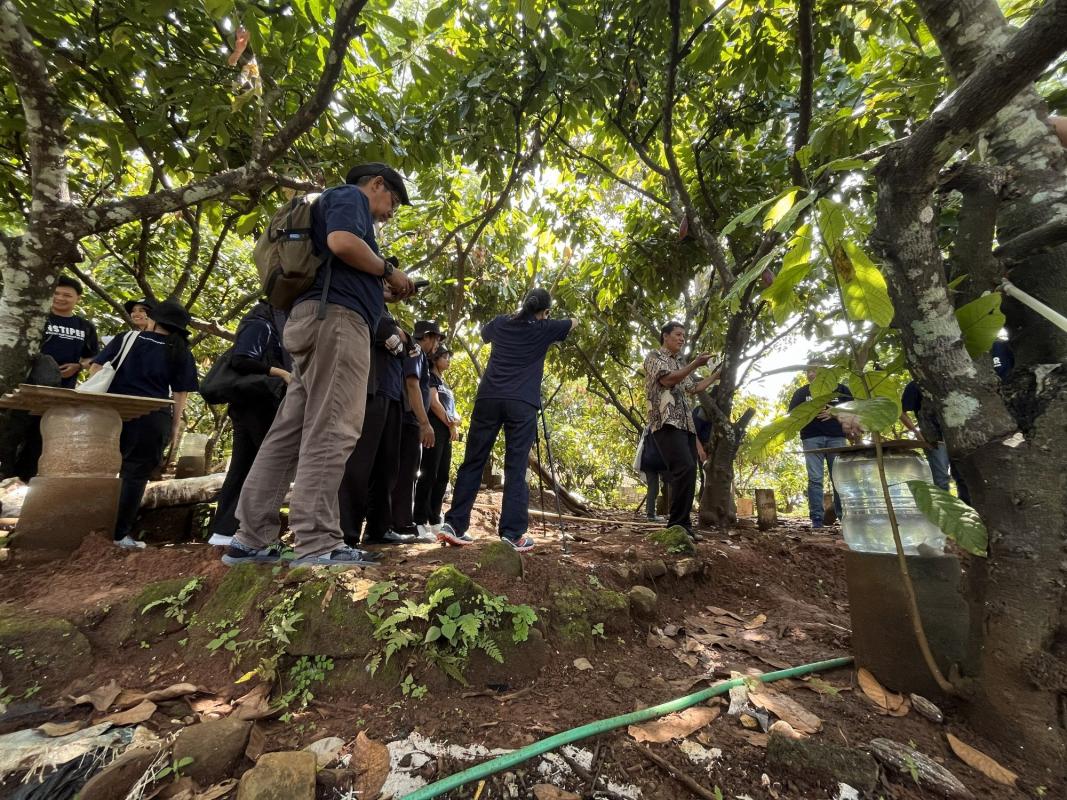
Session collective et immersion terrain lors de la formation technique IndoKakao à l’Université Instiper, reliant science post-récolte, organisations paysannes et chocolat artisanal (© IndoKakao/partenaires).
Strengthening post-harvest control for premium cocoa quality
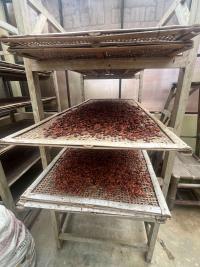
Infrastructure communautaire de séchage observée lors de la visite de terrain à Kulon Progo (© IndoKakao/partenaires).
Premium-quality cocoa depends on a tight control of post-harvest operations—especially fermentation and drying—that shape flavour development, defect rates, and ultimately market value. During the IndoKakao training week at Instiper University, participants deepened a shared technical baseline on the main quality drivers: fermentation sequences and monitoring, drying methods adapted to smallholder constraints, and practical quality control checkpoints at community level. The discussions explicitly connected “science to market”, showing how post-harvest choices translate into sensory profiles and price positioning for fine-flavour cocoa.
Learning from operational rural models of cocoa value addition
A key strength of the week was learning directly from operational, rural-based value addition models. In Kulon Progo, farmer-led initiatives demonstrated integrated setups combining productive cocoa plots, functional fermentation systems, drying areas sized for community volumes, and small-scale chocolate fabrication. Seeing two nearby models in action enabled side-by-side comparison of organisation options (equipment choices, workflow, hygiene/traceability practices) and community engagement approaches—concrete elements that strongly influence consistency of bean quality and the feasibility of local processing.
Integrating sustainability and circular economy innovations at farm level
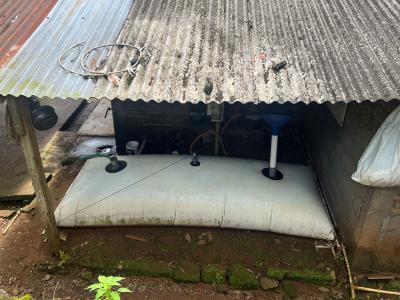
Innovation d’économie circulaire à l’échelle de l’exploitation : valorisation des écorces de cabosses de cacao en biogaz via un biodigesteur à Gunung Kidul (© IndoKakao/partenaires).
In Gunung Kidul, the technical focus expanded to sustainability and circular economy at farm scale. One highlight was an on-farm biodigester converting cocoa pod husks into biogas for household cooking—an example of low-cost waste valorisation that can reduce pressure on fuelwood while improving overall farm system efficiency. Additional community-based sites offered discussion spaces on constraints faced by smallholders (climate, infrastructure, labour, quality consistency) and on what kinds of training modules best match real decision points in the field.
Defining the next steps for IndoKakao’s capacity-building pathway
Partners agreed on the next technical steps for IndoKakao capacity building: (i) a structured curriculum combining theory with hands-on coaching; (ii) strengthened “demonstration sites” with local farmer groups; (iii) closer research–practice collaboration to refine fermentation/drying protocols under smallholder conditions; (iv) dedicated sustainability modules (biogas, composting and broader waste management); and (v) market-oriented training clarifying premium chocolate requirements. A multi-level yearly calendar (beginner/intermediate/advanced) is envisioned to progressively professionalise farmers, processors and emerging chocolate artisans.
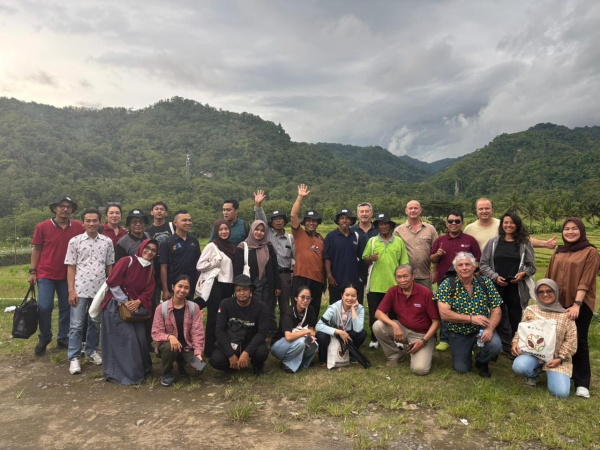
Photo de groupe des participants durant la semaine de formation IndoKakao à l’Université Instiper (© IndoKakao/partenaires).