








Institutional news 12 May 2026

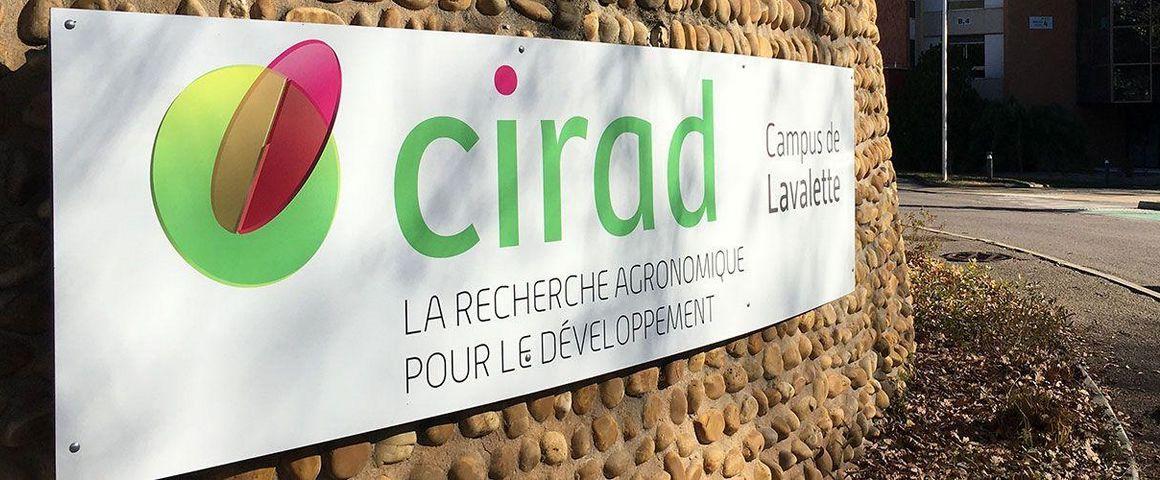
Lavalette Campus entrance, Montpellier © Denis Delbecque, CIRAD
The French High Council for the Evaluation of Research and Higher Education (Hcéres) recently published its latest assessment of CIRAD as an establishment. We look at the key points in its report.
Anthony Farisano: First of all, an observation: the Haut Council recognises our unique position and stresses its relevance in the light of future global challenges. What makes us unique is our quality scientific output, our international reputation, our capacity to lead wide-ranging scientific projects, our exceptional scientific and experimental facilities, our long-term partnership model built with institutions in the global South, and also the importance of our work for society, public policy and science diplomacy. It salutes our engagement and our teams' agility in response to crises, from the Covid-19 pandemic to cyclone Chido in Mayotte. That said, it does not stop there: it also makes recommendations, that is what it is there for…
A.F.: In particular, the High Council suggests articulating our different remits more effectively, making our strategy more legible, and sharing that strategy better. It also recommends going further still in analysing the impact of our research, both in other countries and in the French overseas regions. It advises making diversifying our resources a priority, notably by working more with the private sector. Its last suggestion is that we position ourselves better as regards European and international decision-making bodies in our fields of expertise, and coordinating more effectively with our partners in France and elsewhere. A large number of its recommendations are already among the actions and priorities we identified in our "post-2026" reflections and our self-assessment report.
In short, our achievements and assets have been recognised. We must now diversify and increase our financial resources, and link our future ambitions and means more effectively. This means supplementing and consolidating certain structures, and continuing to work on our interactions and impact.
A.F.: We have been concerned about wage levels for several years. As regards this aspect, the High Council's recommendations tally with our analysis: it confirms that the resets included in the 2020 French research programming act have primarily benefited public scientific and technological establishments (EPSTs) and universities, widening the pay gap at the expense of workers at public industrial and commercial establishments (EPICs) such as CIRAD. Moreover, its recommendation also concerns our line ministries, with which we shall be working to resolve the issue.
The High Council also pinpoints another topic on which we should be working more with our line ministries: the need to find long-term funding for the biological resource centres we manage, which are a strategic global asset. There is also the issue of resources: we fully share their recommendation that we must diversify our resources from the private sector, while not losing any of our scientific independence, obviously. This is a strategic component in the post-2026 reflections we have presented to our employees. Lastly, the High Council recommends that we anticipate our future requirements in terms of skills and our total payroll, in view of the continuing high number of retirements and our fast-changing professions.
A.F.: In the global South, we have a sound partnership model, but it needs to move still further towards more co-construction, and that is an objective we have been working towards for several years. The High Council suggests CIRAD boost its scientific synergies with INRAE, by harnessing the two establishments' complementary expertise in terms of the major global issues, particularly in the overseas regions. We shall be taking that recommendation on board. Moreover, like the Hcéres, we are convinced that the overseas regions are strategic territories in which a lot is expected of CIRAD as regards finding solutions to climate, food and health crises, and CIRAD is the research organisation that is most present in those regions. However, our operations remain highly dependent on sourcing local funding. To this end, our 2024-2028 roadmap for the overseas regions, which contains 12 indicators, will allow us to measure the impact of our activities. Last of all, in our post-2026 reflections, we reached the sale conclusion as to the necessity of making CIRAD's position within the EU an even more strategic lever. To do so, we shall be building on our role as a key player as regards tropical agriculture, and heading coalitions and alliances.
A.F.: I'll start with impact: the ImpresS method is recognised, but the High Council observes that it is not uniformly implemented and it does not measure the scientific impact of our work. In other words, we must pursue its appropriation within CIRAD and supplement it to measure all forms of impact. Our line ministries and other stakeholders often make similar requests. In terms of innovation, the High Council suggests we should exploit our innovation potential as an institution more effectively. This was another aspect of our post-2026 reflections. As far as science-society aspects are concerned, our role in relation to society, public policy and science diplomacy is recognised. However, we now need to give these operations more strategic impact by allocating sufficient resources, which will also have to be discussed with our line ministries. As regards open science, the High Council invites us to be even more ambitious, in view of the solidity of our existing structure and our results. The aim is to position CIRAD as a key international player. However, we must guarantee reciprocity with our partners in the global South, who are very often co-authors. Lastly, in terms of digital technology, we are currently finalising our digital technology roadmap, which will answer a number of the questions raised.
A.F.: First and foremost, it is an independent external opinion from experts in research and institutional management. It is therefore a valuable tool, which helps us to find our place in relation to what already exists and what is happening around us. It is also useful for setting a course and grasping some of the internal and external dynamics that characterise our establishment. The High Council's recommendations are just that. They are not instructions, but we take them very seriously. We have already begin working in line with some of them, and they will fuel our strategy and our exchanges with our line ministries in the coming months.
Institutional news 12 May 2026
Institutional news 4 February 2026
Institutional news 2 January 2026