












- Home
- Worldwide
- Our regional offices
- Southern Africa and Madagascar
- News : Southern Africa and Madagascar
- Strengthening participatory research and improving data quality in Malawi
Strengthening participatory research and improving data quality in Malawi

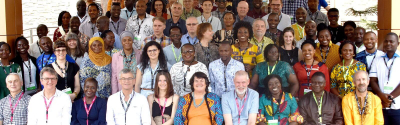
Workshop participants in Malawi © OXFAM
The Rooted in Diversity (RiD) project, through its Outcome 3 on innovative farmer–researcher collaboration models, aims to bring together two complementary participatory research approaches: (1) The Farmer Field School (FFS) approach, centered on farmer learning, experimentation, and informed decision-making; and (2) Research-driven Participatory Variety Selection (PVS), focused on generating high-quality performance data to better understand adaptation and Genotype × Environment (G×E) interactions. At the heart of this integration are adapted experimental designs and evaluation methods that balance farmer priorities with scientific rigor. These include tailored Agro-Ecosystem Analysis (AESA) forms and the innovative Agro-Satellite experimental designs developed by M. Turbet-Delof from the AGAP Institute, CIRAD, specifically adapted to the RiD context.

Workshop participants in Malawi © Cirad
During the workshop, M. Turbet-Delof provided both theoretical and practical insights into these tools, including cutting-edge statistical approaches for Participatory Plant Breeding. Participants were introduced to the recently developed open-source R package PPBStan, designed to analyze intra- and inter-FFS variety and management experiments. Hands-on sessions allowed participants to design experimental layouts, test the PPBStan tool using their own datasets, and explore its functions and outputs to support data-driven decision-making. To facilitate a smooth transition from field data collection to analysis, customized KOBO forms were developed for AESA data within the FFS–Agro-Satellite designs, enabling direct data import into the analytical workflow.
Overall, the workshop marked an important step toward strengthening participatory research, improving data quality, and fostering shared learning between farmers and researchers. It will be followed up by webinars to deepen the understanding of the statistical methods and joint data analysis at the end of the agricultural season.