













- Home
- Worldwide
- Our regional offices
- Southeast Asian Islands
- News : Southeast Asian Islands
- Banana virology training for climate-resilient production in the Philippines
Strengthening banana viral disease detection and breeding capacity under the AFD-supported CCAP
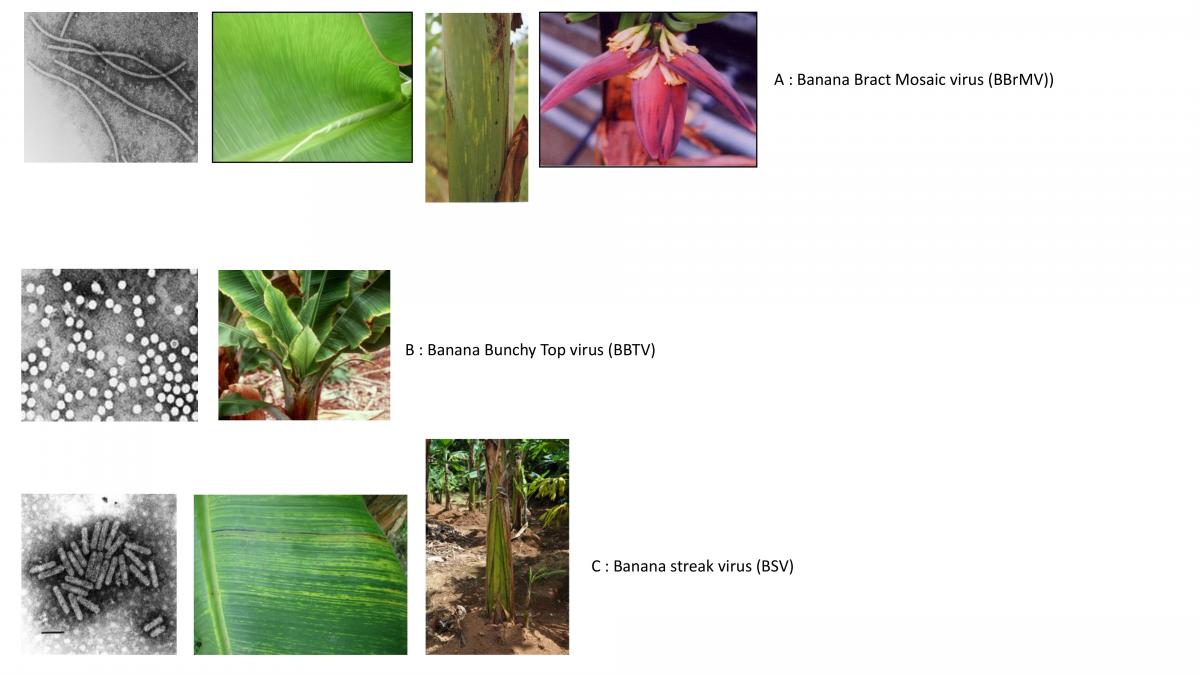
Caption : (A) Electron microscope image of the Banana Bract Mosaic virus and the symptoms associated with this virus on a banana plant ; (B) Electron microscope image of the Banana Bunchy Top virus and the symptoms associated with this virus on a banana plant ; (C) Electron microscope image of the Banana streak virus and the symptoms associated with this virus on a banana plant
Background and focus of the training
Banana is the fourth most produced crop in the Philippines, yet viral diseases remain a structural constraint to sustainable production. The training will focus on banana bunchy top disease (BBTD/BBTV), banana bract mosaic disease (BBrMD/BBrMV), and banana streak disease (BSV), including endogenous BSV activated by abiotic stress and relevant to B-genome banana movement and breeding. It will connect diagnostics with banana improvement and climate adaptation.
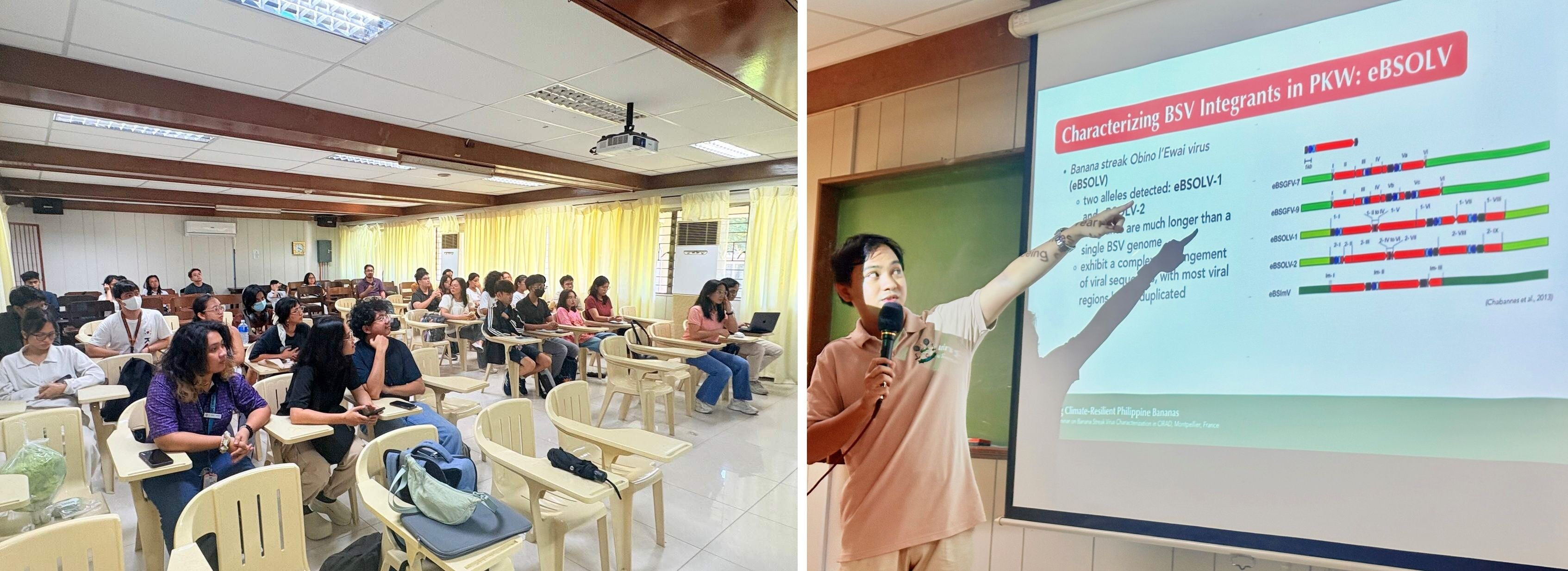
A number of lectures will be given to the various attendees to familiarise them with the different pathosystems under study, so that they can subsequently recognise the symptoms of the three viruses and identify the viral agent responsible for them using molecular tools. © Matthieu Chabannes, CIRAD
Course organization, partnerships, and expected outcomes
Hosted at the Genetics and Plant Pathology Laboratories of the Institute of Plant Breeding, UPLB, the course is designed for 15-20 participants, including 12 slots for Department of Agriculture agencies. Experts from UPLB-IPB and CIRAD, including Dr Matthieu Chabannes, Dr Fe M. Dela Cueva, Dr Roanne R. Gardoce, and colleagues, will combine lectures and wetlab practicals, including molecular detection of viruses and interpretation of the results.
The training is part of Component 2.1 of the AFD-supported Climate Change Action Program (CCAP) technical assistance implemented with DA-BAR, UPLB, and CIRAD, and aligned with complementary work supported by the Gates Foundation. It contributes to CCAP’s objective of strengthening climate adaptation capacity in agriculture by equipping Philippine institutions with operational tools for virus surveillance, varietal assessment, and future breeding innovation.
By the end of the training, participants are expected to recognize symptomatology of the three viruses and to identify the viral agent responsible for them using molecular tools. Regarding BSV, they will also be able to distinguish the different species. Finally, they will explain how these techniques can feed into national banana improvement and surveillance efforts.
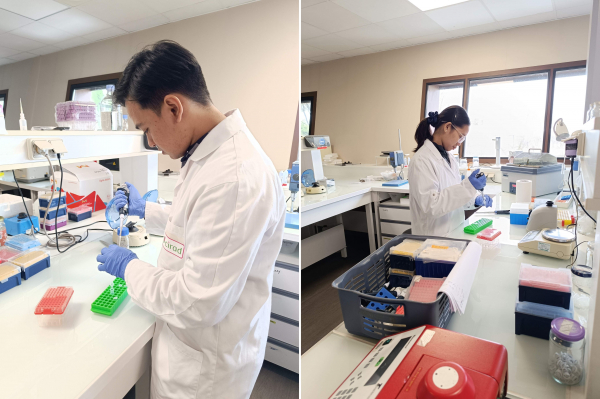
A full day of hands-on training will be held in the UPLB laboratories to put into practice the knowledge gained during the lectures. © Matthieu Chabannes, CIRAD