















- Home
- Worldwide
- CIRAD worldwide
- Projects
- ROTATES Project
Minor root and tuber crops fostering agrobiodiversity and ecosystem services - ROTATES
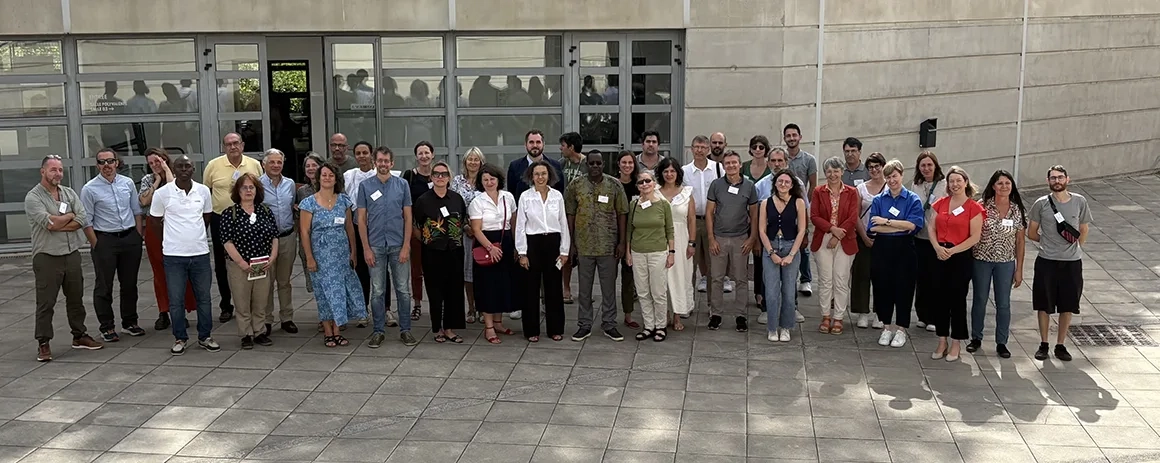
Consortium members © Cirad
Root and tuber crops: a sustainable alternative in the face of biodiversity loss and climate change
Agriculture occupies more than 38% of the Earth’s land surface and is the leading driver of biodiversity loss worldwide. This biodiversity loss is more pronounced in monoculture-based systems, and is exacerbated by climate change. Root and tuber crops require few inputs and can be combined with other crops in agroecological systems. They have strong potential for integration into European cropping systems in temperate regions, especially as demand for these crops in Europe has tripled over the past decade.
These crops have the potential to reduce biodiversity loss, to preserve agrosystems and to improve conservation and restoration efforts, thereby contributing to food security and the adaptation of agricultural production to the impacts of climate change.
The integrated approach and key actions of the ROTATES project
ROTATES is a multidisciplinary project that places the engagement of value chain stakeholders at the heart of its activities.
ROTATES follows an iterative, flexible approach:
- A holistic assessment to understand the current situation of root and tuber crops along value chains in the project’s target regions
- The implementation of activities for integration into agroecological systems that maximise ecosystem services
- An increase in the value of products derived from root and tuber crops by producing fresh and processed goods for human and animal consumption
- The adoption of technologies developed by the project through training for the different stakeholders, in particular farmers, and the development of policy frameworks for decision-makers
- These actions are carried out within eight work packages, six pilot living labs, four breeding hubs, three case studies on processed foods, four case studies on forage products, and six socio-economic case studies.
Agroecological and genetic approaches to improve the sustainability of cropping systems
- Identifying key factors and finding solutions to overcome barriers to the adoption of root and tuber crops and crop diversification.
- Promoting the diversification of crops and agroecological management practices through the introduction of root and tuber crops into European agrosystems.
- Increasing genetic diversity in gene banks, with pathogen-free material readily available to farmers, seed suppliers and breeders.
- Raising awareness and building the capacities of stakeholders, particularly farmers and breeders, on the use of root and tuber crops, agroecological practices and the distribution of healthy genetic material.
- Strengthening local value chains through the inclusion and processing of root and tuber crops for human food and animal feed.
Contract partners:
- Technologiko Panepistimio Kyprou - Cyprus
- Université de Liège - Belgium
- Universidade da Madeira – (Madeira) - Portugal
- Universidade dos Acores – (Azores Islands) - Portugal
- Instituto Nacional de Investigaçao Agraria e Veterinaria - Portugal
- Associação da Costa Oeste - Portugal
- Consiglio per la Ricerca in Agricoltura e l'analisi dell'economia agraria - Italy
- Instituto Canario de Investigaciones Agrarias - (Canary Islands)-Spain
- Scotland’s Rural College - United Kingdom
- European Network Of Living Labs Ivzw - Belgium
- Inovacijsko Tehnoloski Grozd Murska Sobota - Slovenia
- Thomas Plants - France
- Association Panakuh - (French Guiana) - France
- Centre de Recherche de l'institut Lyfe - France
- Institut National de Recherche pour l'Agriculture, l'Alimentation et l'Environnement - INRAE France
- Geoponiko Panepistimion Athinon - Greece
- Université Marien Ngouabi - Republic of the Congo