
















- Home
- Worldwide
- CIRAD worldwide
- Projects
- Desira OI Project
Agroecological transition in the South-West Indian Ocean - DESIRA+ OI
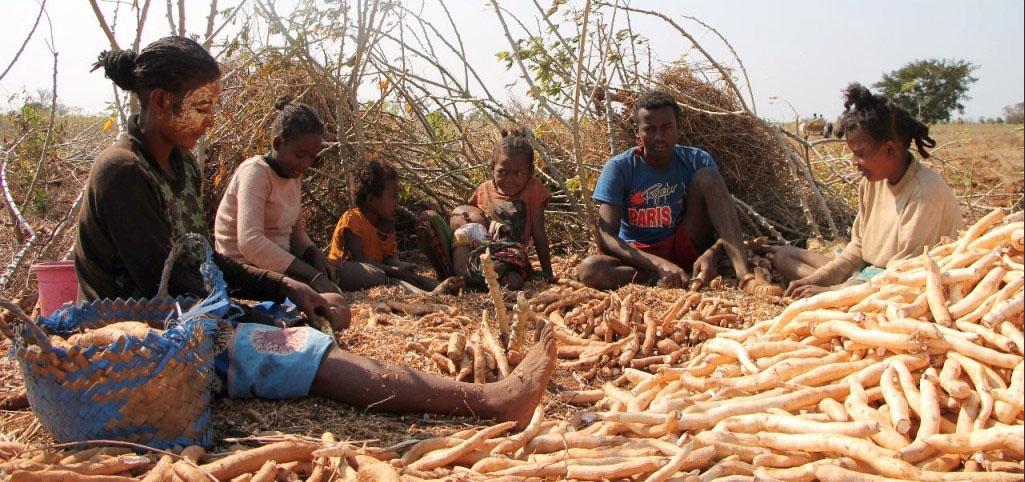
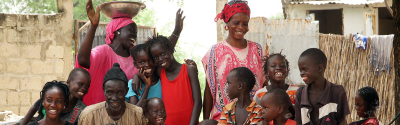
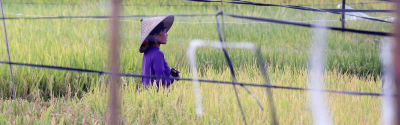
Women farmers in south-western Madagascar © Clara Sitraka Raketabakoly, CIRAD
Challenges and opportunities for food security in the Western Indian Ocean
Food and nutrition security is a major challenge for the 33 million people living in the Western Indian Ocean region. The effects of climate change, soil degradation and biodiversity loss are undermining production capacities, while access to food, as well as and its availability and quality, remain unequal depending on the territory.
In a region where food insecurity continues to affect a significant proportion of the population, these constraints call for adaptation strategies that increase the economic and ecological resilience of agricultural systems. In this context, agroecology is emerging as an effective way to achieve lasting change in agri-food systems.
Initiatives already implemented in the region show that agroecological practices can improve productivity, protect ecosystems and meet nutritional needs. The major challenge now lies in scaling up these innovations in order to ensure their uptake by territorial actors and decision-makers.
The actions of the DeSIRA+ OI project are in line with this perspective.
Strategies for scaling up and capitalising on agroecological initiatives
To achieve this goal, the project builds on three complementary components:
Capitalisation
The aim of this component is to analyse a range of agroecological initiatives in the region using a multicriteria analysis framework (targeted scales, innovation support services, support and monitoring-evaluation mechanisms, timescales, etc.). These analyses will inform regional participatory capitalisation workshops, along with the guidelines of a call for projects launched to support the scaling-up process. Finally, through a series of territorial foresight workshops, this component will contribute to advocacy and to awareness-raising among decision-makers regarding the conditions required to remove institutional and political obstacles to scaling up.
Support for scaling up
Drawing on the outputs and outcomes of Component 1, regional facilitation led by PReRAD-OI will foster a movement to promote agroecology at the regional scale and to strengthen stakeholder networks, in order to support agricultural and food-system transitions. This component will also select (through a call for proposals), fund and monitor the implementation of national and regional projects that address the challenges of scaling up agroecology.
Coordination of action
This component covers the coordination and operational management of the DeSIRA+OI Action as a whole, as well as administrative and financial monitoring, communication and capacity building for project leaders supported on various aspects (e.g. theory of change, project co-design and monitoring-evaluation, budget management, etc.).
Expected results
- Stakeholders involved in the agroecological transition in the Western Indian Ocean will co-develop analytical frameworks and indicators to clarify how agroecology support systems can contribute to scaling-up processes;
- Stakeholder networks in the region will be equipped to strengthen regional territorial dynamics on agroecology-related topics, by fostering knowledge sharing, the connection of initiatives and the emergence of partnerships;
- A dialogue and consultation will be established with decision-makers in order to strengthen the science-policy interface, informing decision-making by identifying the political and institutional conditions for the territorialisation of agroecology and taking account of national contexts;
- Multi-stakeholder consortia, aligned with agroecological transition pathways and addressing the challenges of scaling-up processes, will be identified and supported in in the implementation of their projects;
- A robust monitoring and evaluation system, together with capacity-building and participatory capitalisation activities, will be implemented to assess the effects of the selected projects in terms of scaling up.