




















- Home
- Worldwide
- CIRAD worldwide
- Projects
- ASEACA Project
Mobilising the One Health approach to reduce the risks of emergence of zoonotic pathogens with pandemic potential - ASEACA

The One Health approach to address emerging zoonotic risks
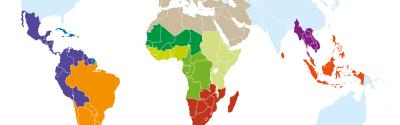
The emergence of zoonoses with pandemic potential is driven by environmental, climate and socioeconomic change, as well as increasing interactions between humans, animals and ecosystems. In vulnerable regions such as Southeast Asia, East and Southern Africa and the Caribbean, these risks are amplified by limited surveillance capacities along with social inequalities, particularly gender inequalities.
The ASEACA project addresses these challenges, using the One Health approach to better understand, prevent and manage these risks, while also strengthening public policies and regional cooperation dynamics.
ASEACA: a collaborative approach built around four components
The ASEACA project is based on a co-construction approach involving local, national and regional stakeholders.
It is structured around four key components:
- Assessing the risk of zoonotic disease emergence according to socio-ecological contexts;
- Reducing these risks through the development of tailored prevention strategies;
- Co-developing and implementing surveillance and early detection systems, accompanied by socioeconomic analyses;
- Integrating gender and climate issues, and fostering dialogue between science, State and society.
The project organises regional workshops and exchanges between partners to build local capacities, support existing initiatives and foster collaboration between sectors and territories within the framework of the PREACTS programme.
Expected results
- Improved knowledge of the risk factors driving the emergence of zoonoses;
- Implementation of locally adapted prevention and surveillance strategies;
- Enhanced capacities of local stakeholders in health risk management;
- Greater involvement of communities and civil society in health-related decision-making;
- Better consideration of gender inequalities in prevention strategies;
- Stronger regional and cross-sectoral collaboration within the One Health framework.