




- Home
- Worldwide
- Our regional offices
- Southeast Asian Islands
- News : Southeast Asian Islands
- Community-based management in the protected areas in the Philippines
How does the Protected Area Community-Based Resource Management Agreement (PACBRMA) enable coexistence between local communities and biological conservation in the Upper Marikina River Basin Protected Landscape (UMRBPL) on the island of Luzon, Philippines?
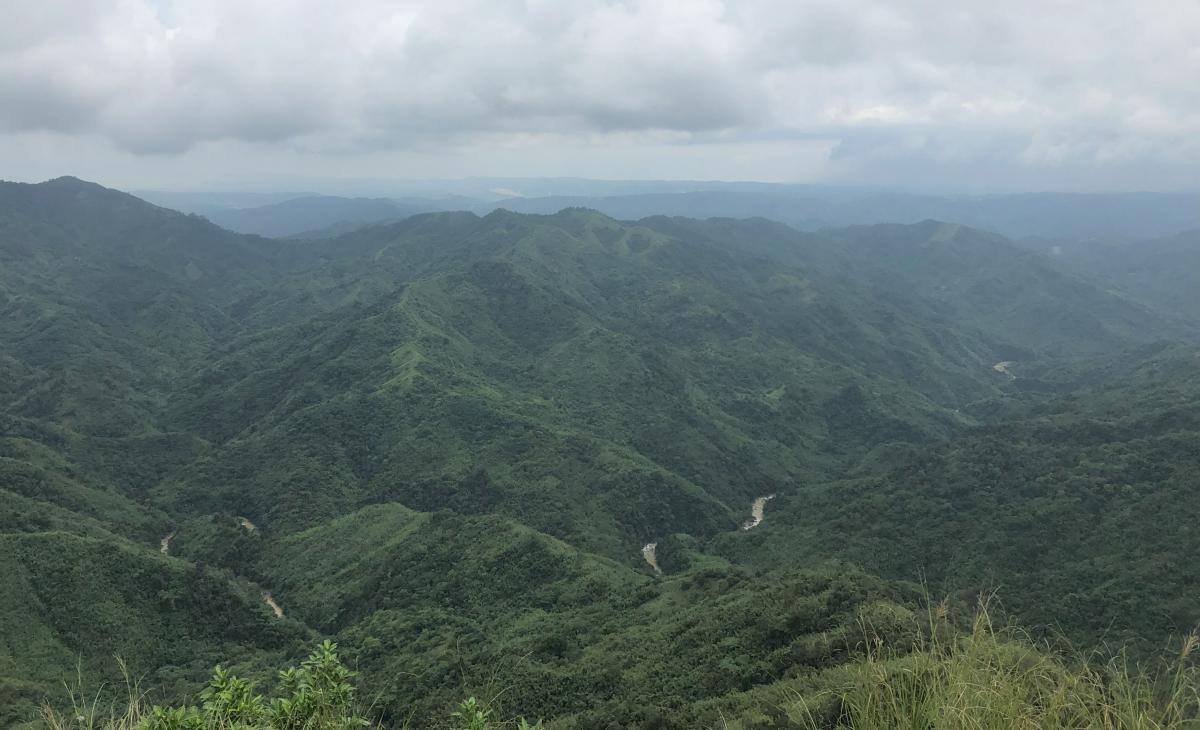
The upper Marikina River watershed influences flooding in Greater Manila during typhoons, which is why special attention is paid to this area in terms of infrastructure and reforestation and the watershed (here the Tayabasan river). Calawis, 2025. © Antoine Perrier
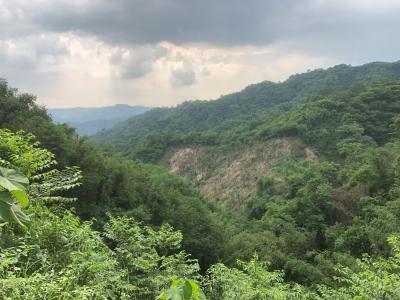
Slash-and-burn area (kaingin) in a mountain slope near Calawis in the UMRBPL. Deforestation causes major erosion and landslides. Calawis, 2025. © Antoine Perrier
As part of the CCAP project, the Department of Environment and Natural Resources (DENR) aims to improve the management of protected areas to mitigate the effects of global warming. To do this, it wants to develop a carbon financing plan based on carbon sequestration in forests within protected areas. The first step is therefore to conduct a state-of-the-art review to understand how protected areas are managed in the Philippines and how the local communities are involved in this management.
For this state-of-the-art, the pilot site is located in the UMRBPL within the village of Calawis. This site is covered by the PACBRMA land management tool, which allows residents to live within a protected area in exchange for reforestation of the landscape. The PACBRMA is a form of community land management within protected areas and therefore grants land rights to residents for 25 years, renewable once.
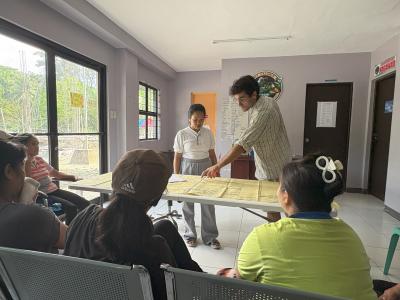
Focus group discussion to make a seasonal calendar of the agricultural and forest activities. Calawis, August 2025. © Archie Tulin
The first step in this mission was therefore to interview those involved in managing the UMRBPL. What emerged was a complex management system centered around the Protected Area Management Board. This board aims to bring together all stakeholders within the protected area for coordinated and decentralized management: representatives of the local government units (LGU), indigenous peoples, NGOs and private companies with interests within the protected area. However, the People Organization that manages the PACBRMA is not represented on this board. The PAMB formulates policies, implemented by the LGU and the People Organization managing the PACBRMA.
In a second phase, household surveys, participatory mapping, seasonal calendars, and field visits helped us understand the villagers' relationship with the landscape. This landscape is dominated by slash-and-burn agriculture. However, over the past two decades, thanks to reforestation efforts by the PACBRMA People Organization and a host of other associations and projects, the landscape has been reforested with fruit trees. This has also been greatly facilitated by the employment of many farmers in infrastructure projects, thereby changing their livelihoods and avoiding slash-and-burn.
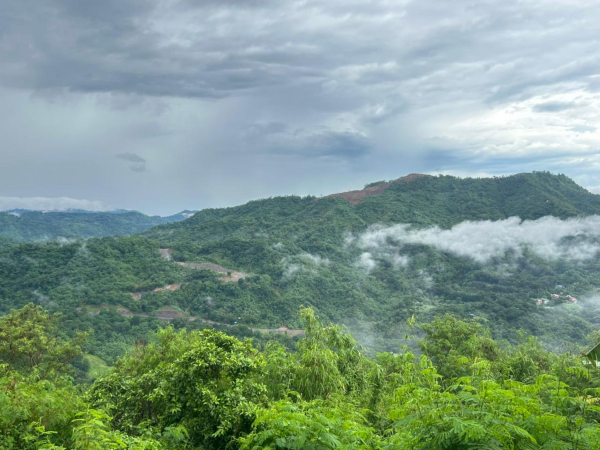
Impact of infrastructure construction on Mount Purro, Calawis. While these projects employ many villagers, they provoke tenure and social tensions. Calawis, August 2025. © Antoine Perrier